Stillwater is known for its charming historic downtown and its setting on the St. Croix River, but some of the area’s most memorable experiences are just a short drive away. Two nearby state parks, one in Minnesota and one just across the river in Wisconsin, offer scenic hiking trails, dramatic river gorges, and waterfalls worth seeking out. Waterfalls add a sense of romance and adventure to any vacation, whether you are sharing a quiet moment beside the rushing water or climbing a trail to reach the perfect overlook. Here is what you need to know about hiking and waterfall hunting at Interstate State Park and Willow River State Park.
Key Takeaways
- Interstate State Park in Taylors Falls, MN, is about 30 minutes north of Stillwater and is home to more glacial potholes in a small area than anywhere else in the world.
- The park’s “Bottomless Pit” is the world’s deepest accurately measured pothole, at just under 60 feet deep.
- Curtain Falls, a seasonal waterfall at Interstate State Park, is best seen in spring or after heavy rain from the Sandstone Bluffs Trail.
- Willow River State Park in Wisconsin is only 20 minutes from Stillwater and features Willow Falls, a 100-foot-wide, multi-tiered waterfall.
- Willow River offers 13 miles of hiking trails, several of which lead directly to Willow Falls.
- Both parks offer something in every season, from roaring spring snowmelt to icy winter waterfalls.
- Plan ahead for vehicle permits: $7 per day at Interstate State Park and $16 per day for out-of-state vehicles at Willow River.
Interstate State Park: A Geological Wonder Near Taylors Falls
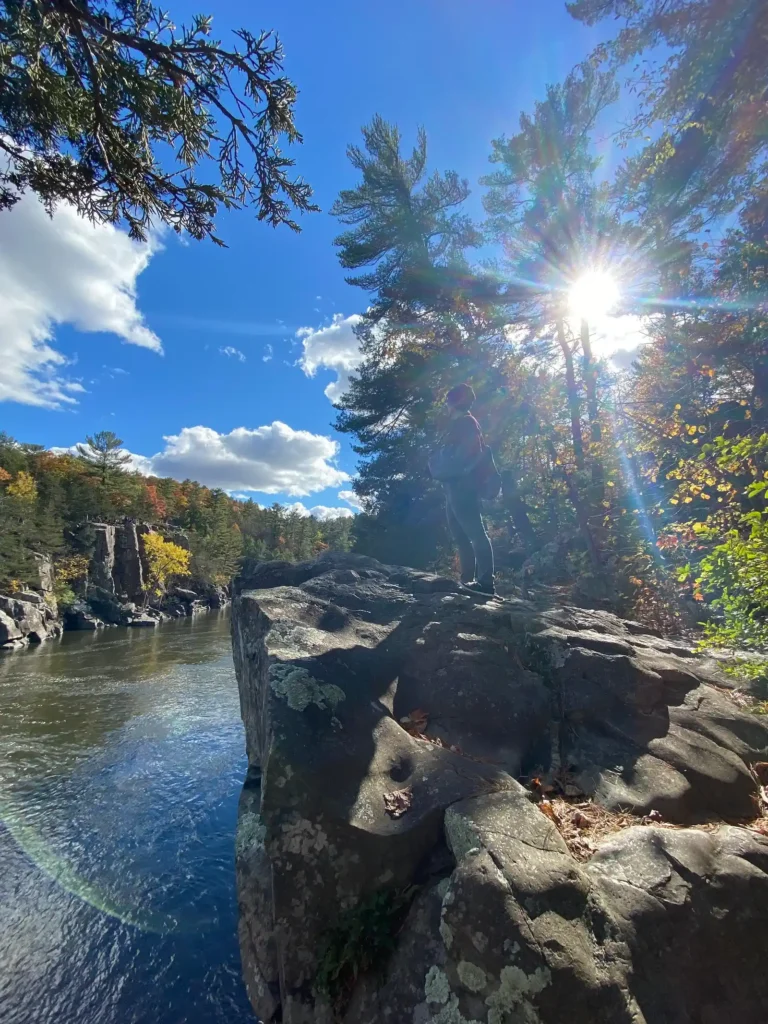
Located about 30 minutes north of Stillwater, Interstate State Park is a must-visit for hikers, history lovers, and anyone curious about the forces that shaped the landscape. The park is open daily from 8 a.m. until 10 p.m., and a one-day vehicle permit costs $7
A Park With a History
In the late 1800s, the threat of mining along the Dalles of the St. Croix River inspired citizens from Minnesota and Wisconsin to work together to protect it. Their efforts created the first interstate park in the nation. The Minnesota Legislature established its side of the park in 1895, and Wisconsin followed in 1900. Today, the two state parks operate separately, but both offer trails and sweeping views along the St. Croix River. The Minnesota side is the second oldest state park in the state.
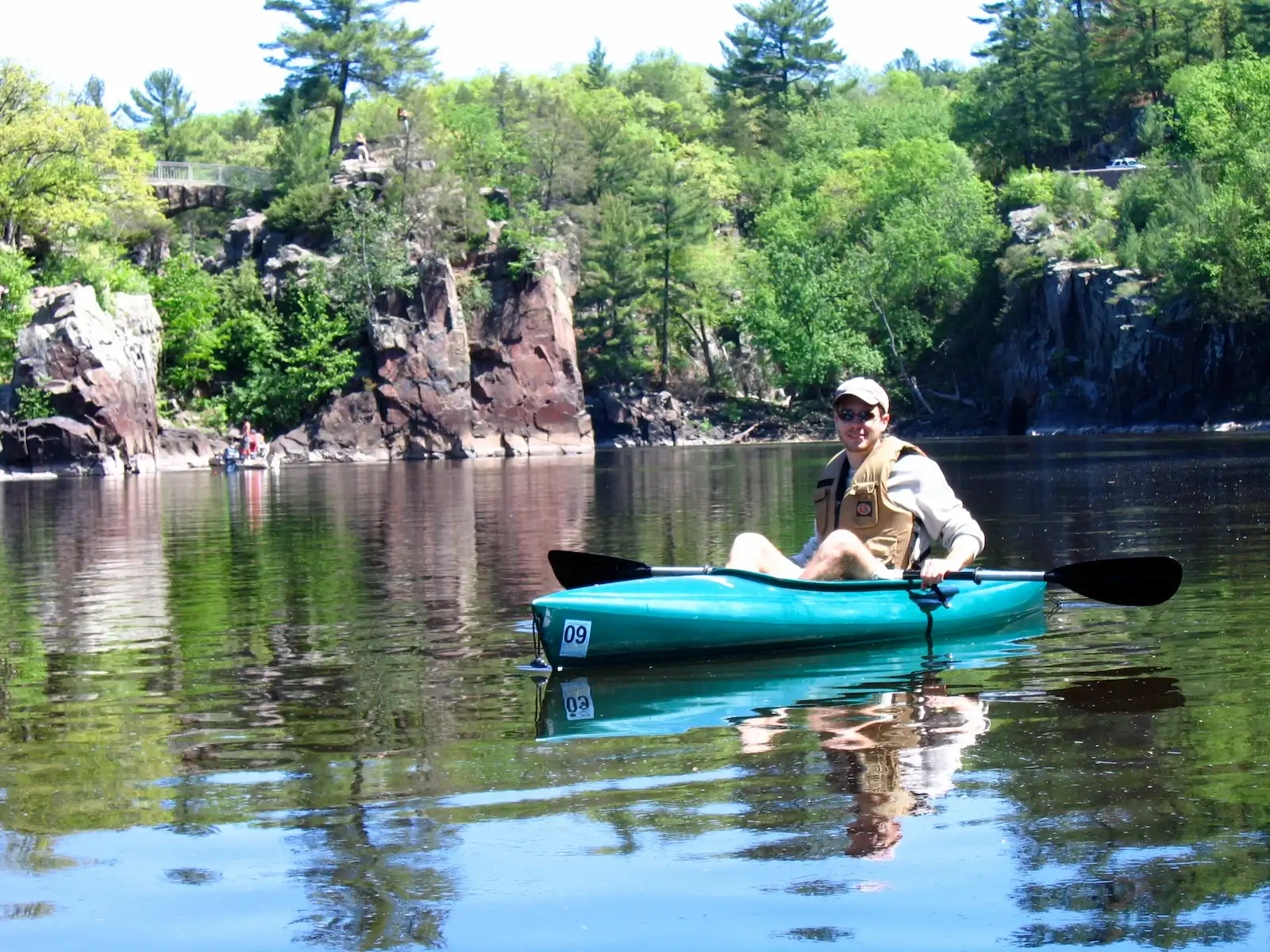
Visitors can enjoy scenic river views, canoeing, camping, fishing, rock climbing, and one of the park’s most fascinating features: the potholes.
The Potholes: Not What You Think
When you hear “potholes,” you might picture the bumps on a city street, but the potholes at Interstate State Park are something else entirely. They are among the most outstanding and unique geological features found anywhere in the world.
Long ago, the Glacial St. Croix was the fastest and biggest river in North America. Swirling eddies formed in the current and carved holes into the basalt at the bottom of the riverbed. As the holes grew larger, more water poured in and carved them deeper still. Sometimes large rocks became trapped inside the holes. Known as “grindstones,” these rocks spun with the water and became part of the carving process. Grindstones have been found in many of the park’s potholes. As the river slowed and eventually receded, the potholes were left exposed for us to explore today.
The numbers are impressive. Interstate State Park contains more potholes in a smaller area than any other place on Earth, and it is home to the world’s deepest known potholes. The “Bottomless Pit,” the deepest one measured accurately, is just under 60 feet deep and 12 to 15 feet wide. The widest pothole, “The Cauldron,” sits near the boat landing and stretches over 20 feet across. Smaller potholes range from just a few inches to five or more feet across.
If you look closely, you can find more than a hundred potholes, all within an area of less than 20 acres, and there are many more still waiting to be discovered. For a deeper look, check the park’s events calendar for guided pothole tours.
Hiking Trails at Interstate State Park
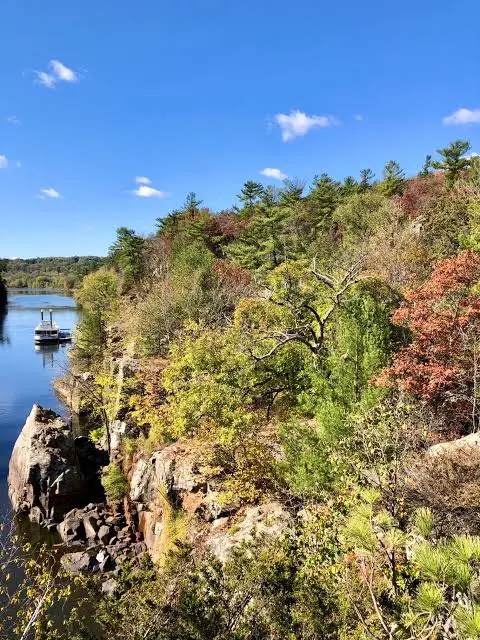
The park’s trails are short enough to enjoy in an afternoon but packed with things to see.
- Glacial Potholes Trail is an easy half-mile loop that starts at the visitor center and offers views of both the St. Croix River and the potholes. One of its highlights is the chance to actually go inside a pothole. Venture 35 feet down into the Bake Oven Pothole for a perspective few visitors expect.
- Sandstone Bluffs Trail is a one-mile loop that includes views of the seasonal Curtain Falls. Be prepared for some effort, as the western part of the trail has more than 300 stairs.
- Railroad Trail follows the route of the old Northern Pacific Railroad and runs 1.5 miles one way, making it a good option for a longer, more relaxed walk.
Curtain Falls
Waterfall lovers will want to keep an eye out for Curtain Falls, a seasonal spout visible along the Sandstone Bluffs Trail. Because it depends on runoff, the best time to see it is in spring during snowmelt or after a heavy rain.
Wildflowers, and Wildlife
From April through September, wildflowers fill the park. Turn your hike into a scavenger hunt with the park’s wildflower checklist and see how many you can spot.
Though small, the park’s diverse landscape of floodplains and maple, oak, and pine forests makes it a haven for rare and endangered species. Visitors may spot white-tailed deer, skunks, raccoons, squirrels, reptiles, and amphibians, and birdwatchers will appreciate that more than 200 bird species have been recorded here.
Bonus Adventure: The Ice Age National Scenic Trail
While you are in Taylors Falls, consider crossing into Wisconsin to explore the Ice Age National Scenic Trail. One of only 11 national scenic trails in the United States, this 1,200-mile footpath winds across Wisconsin, tracing the edge of a massive glacier that once covered the state.
Willow River State Park: Home of Willow Falls
Just 20 minutes from Stillwater across the bridge in Wisconsin, Willow River State Park is one of the region’s most popular outdoor destinations. The park is open year-round from 6 a.m. to 11 p.m., and during summer the park office is open daily from 8 a.m. to 8 p.m. A daily vehicle admission pass is $16 for vehicles with out-of-state plates and $13 for vehicles with Wisconsin plates.
Spread across 2,800 acres of rolling countryside, the park is known for its spectacular views of Willow Falls and the Willow River Gorge. Visitors will also find prairie remnants, family and group campgrounds, lakeside picnic areas, a nature center, and paddling, fishing, and swimming on Little Falls Lake.
Hiking Trails at Willow River
Willow River offers 13 miles of hiking trails of varying difficulty, and the most popular destination is Willow Falls. Trails are color-coded, making it easy to choose your route.
- Hidden Ponds Nature Trail (Black) is a paved half-mile trail behind the Nature Center that is accessible for most hikers. Posts and trail guides along the way encourage visitors to slow down and observe.
- Burkhardt Trail (Pink) runs two to four miles, depending on your route. It follows the river bottom, climbs to spectacular overlooks, and then descends back to Willow Falls.
- Pioneer Trail (Yellow) is a 1.2-mile trail that ends at an amazing overlook of Willow Falls.
- Little Falls Trail (Green) is 0.7 miles long and is the only trail in the park that allows bicycles and rollerblades.
- Willow Falls Hill Trail (Gray) is the shortest route to the falls at just 0.4 miles, but be ready for a very steep hill.
- Willow Falls Trail (Blue) offers an easier route to the falls and is still only one mile long.
Visiting Willow Falls
Willow Falls is a multi-tiered waterfall that tumbles over limestone shelves, stretches 100 feet wide, and impresses visitors all year long.
For the most thunderous adventure, visit in spring when the snow is melting. The falls can be so loud that some people have trouble holding a conversation nearby. In summer, the observation deck can get especially busy on weekends, so consider planning a weekday visit for a quieter experience.
Winter brings a more serene beauty, as parts of the waterfall, and sometimes all of it, freeze over. Stillwater doesn’t shut down for winter, and Willow Falls makes a wonderful addition to a Stillwater winter getaway.
Swimming Near a Waterfall
Want to cool off on a warm day? Swimming is permitted in Little Falls Lake. Lifeguards are not provided, so it is best to bring a buddy along for safety.
Plan Your Stillwater Hiking and Waterfall Getaway
With two outstanding state parks less than 30 minutes away, the Aurora Staples Inn in Stillwater makes an ideal home base for outdoor adventure. Whether you visit in spring for roaring water, summer for wildflowers and swimming, fall for amazing colors, or winter for frozen cascades, these trails and waterfalls offer the perfect blend of natural wonder, quiet romance, and outdoor adventure.